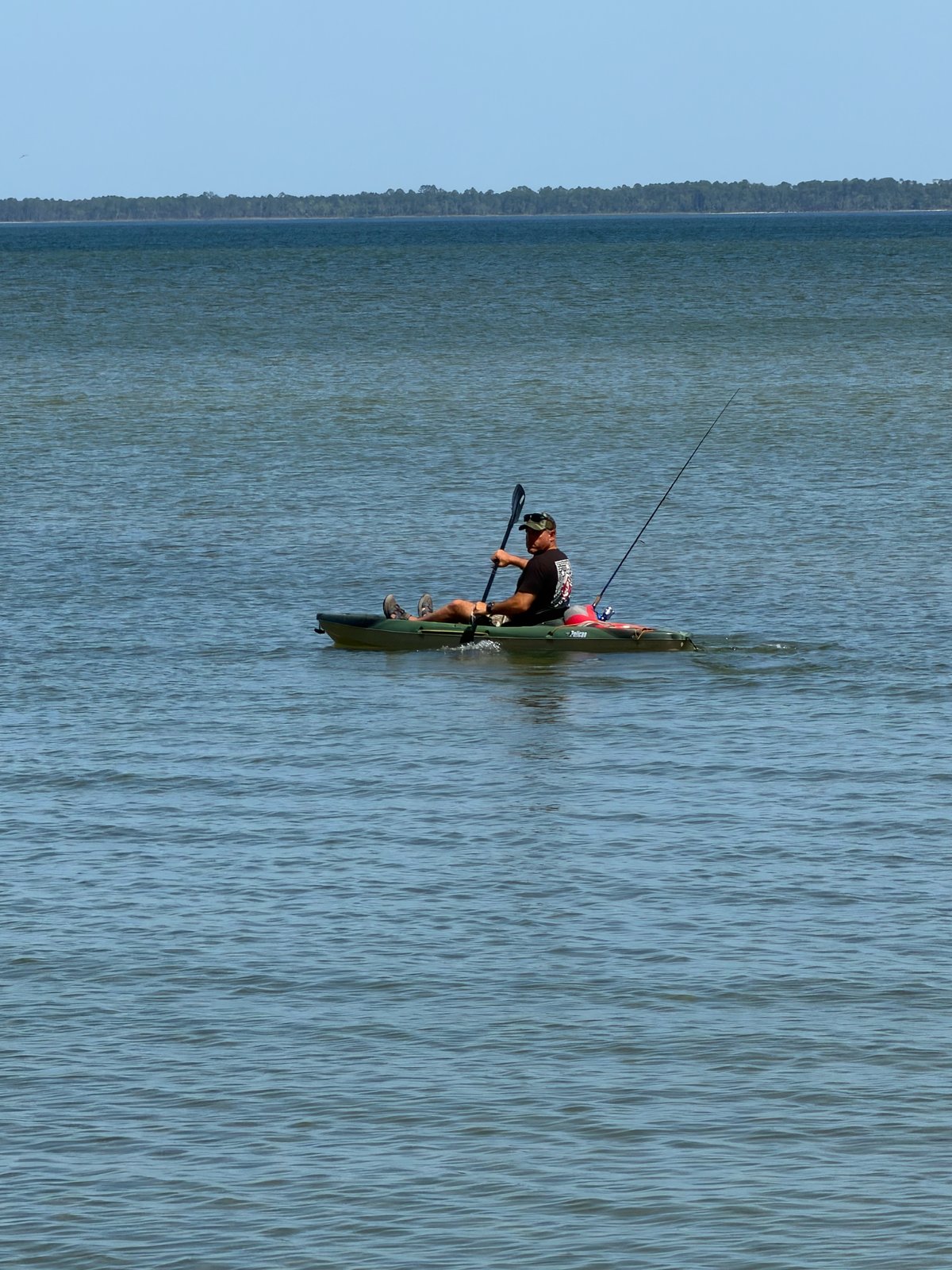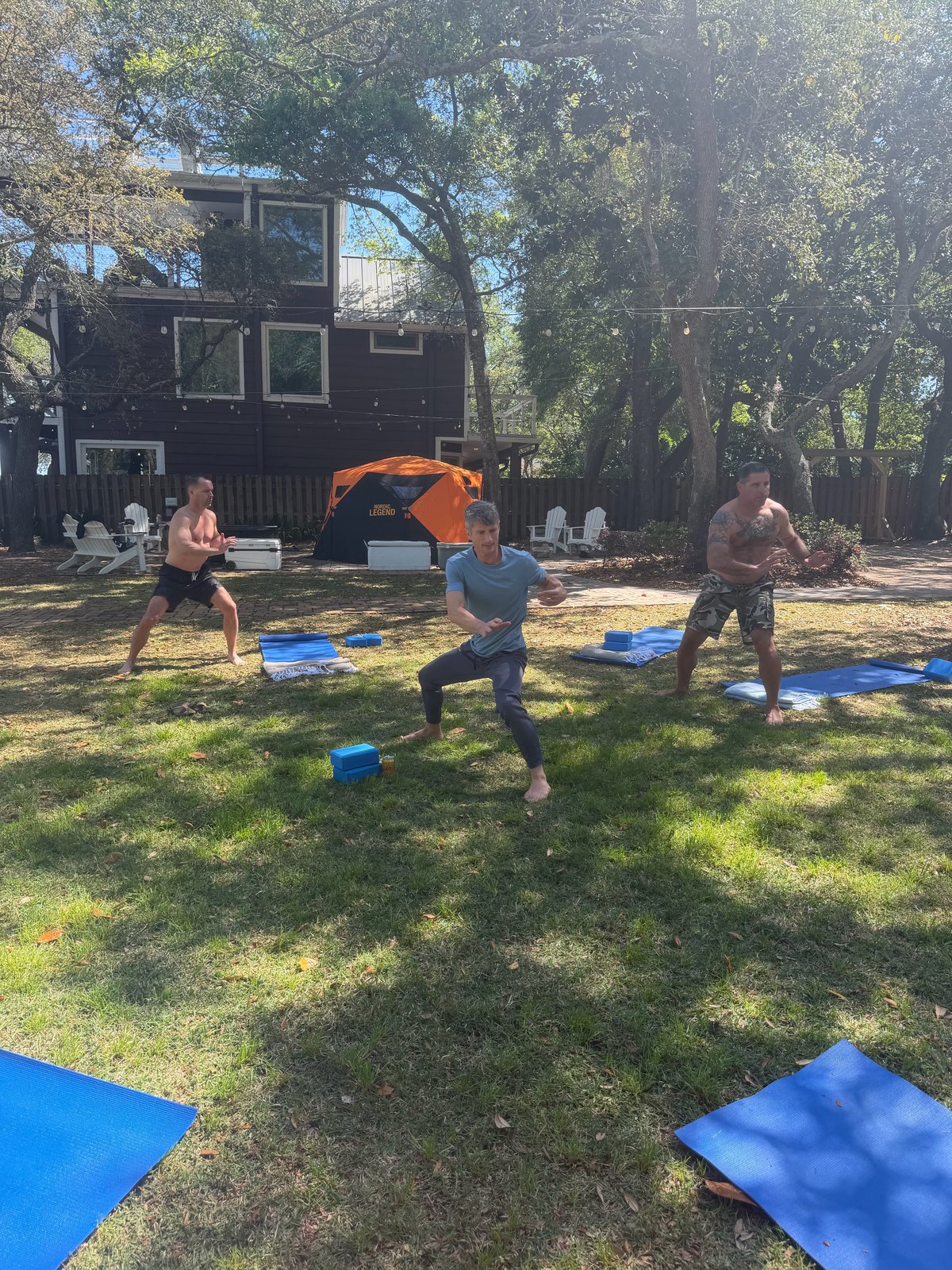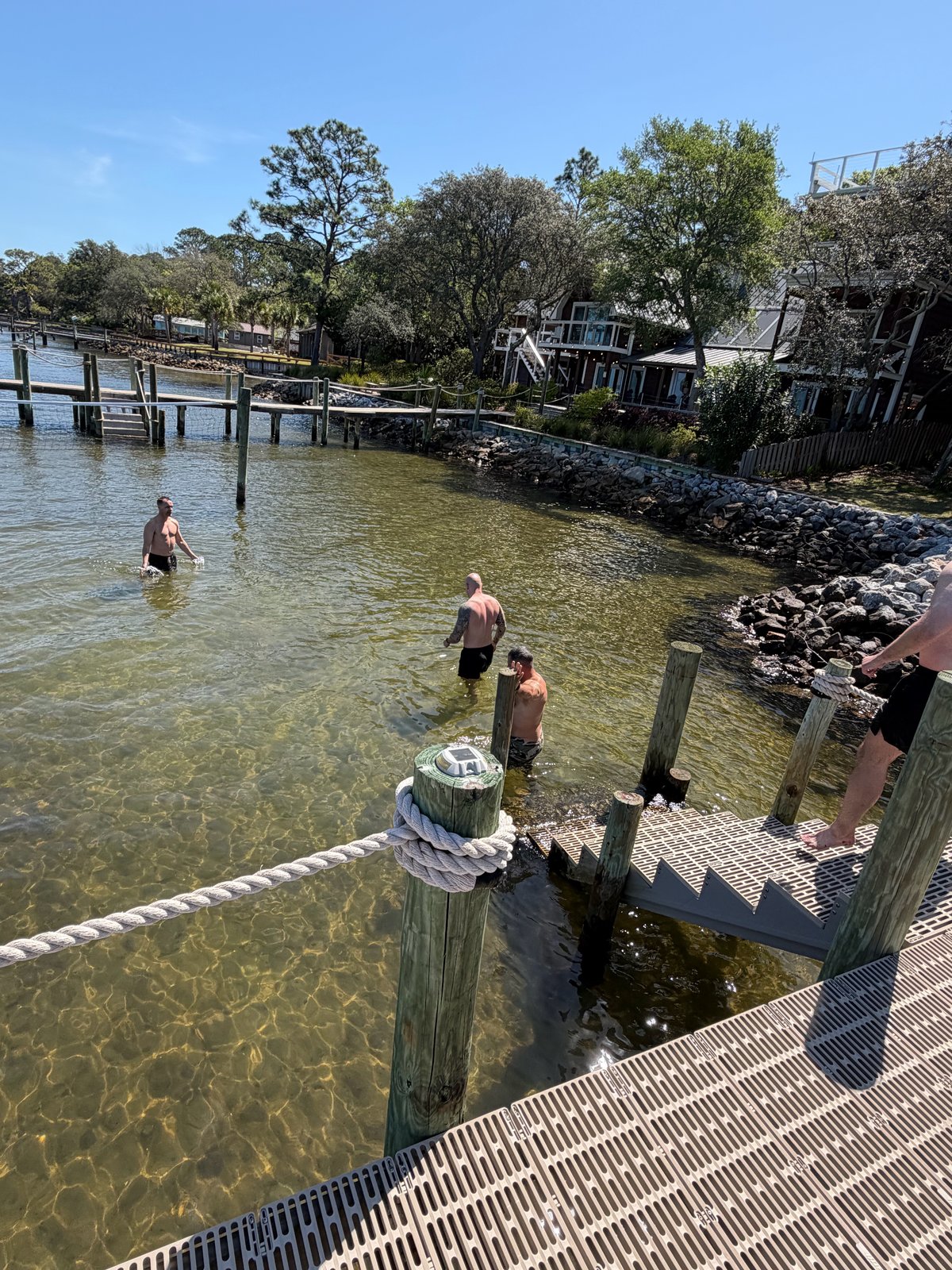
Eleven days from today, seven veterans from every branch arrive in Jacksonville for The Calm Seas Project's Veteran Wellness Retreat, November 6 to 8, 2026. The weekend is built around guided charter fishing, but the schedule also has a sound bath and breathwork, group meals, an Airbnb stay we all share, and a virtual wellness session. Of everything on that list, the sound bath gets the most raised eyebrows. So here's Ryan Gunning's plain-English take on what it is, why it's there, and what to expect if you've never done one.
What a sound bath actually is
Nobody gets wet. A sound bath is a guided session where you sit or lie down, get comfortable, and listen while instruments like singing bowls, gongs or chimes are played slowly around the room. Your only job is to stay still and let the sound do the work. There's nothing to learn, nothing to perform, and nobody grading you. If you fall asleep, that's allowed.
For a lot of Marines and soldiers, that's the hard part. We were trained to stay switched on. Lying on a mat doing nothing on purpose can feel strange the first time. That's normal, and it's kind of the point.
What the research says
The research on sound baths is early, and I'm not going to oversell it. The study people cite most is a 2017 observational study in the Journal of Evidence-Based Complementary & Alternative Medicine. Sixty-two adults filled out questionnaires before and after a singing bowl meditation. Afterward they reported significantly less tension, anger, fatigue and depressed mood. The biggest drop in tension was among people who had never tried it before.
That study had no control group and it didn't look at veterans specifically, so it's a reason to be curious, not proof of anything. A sound bath isn't treatment and it doesn't replace real care. What it does give us is an easy, low-pressure way to slow down together, and on a weekend like this, slowing down is half the mission.
Why it pairs with breathwork and the water
I wrote about breathwork for veterans last week. The two go together. Breathwork gives you something to do with your body, and the sound bath gives you permission to stop doing anything at all. Put them next to a day of fishing, a shared meal and a house full of people who get it, and you have the whole idea behind Calm Seas: more than fishing.
The Calm Seas Project started as an idea among friends on a fishing trip. The best conversations we had happened when nobody was in a hurry, and that's the feeling we're trying to build into every part of the weekend.
What I'd tell a first-timer
- Come as you are. Comfortable clothes, no special gear. If you're packing for the weekend, my packing list covers the rest.
- You're in control. Sit up, lie down, keep your eyes open, step out if you need to. Nobody will think twice.
- Don't chase a feeling. Some guys feel relaxed, some feel restless, some just feel tired. All of it counts.
- Try the breathing first. A few slow breaths before the session starts makes it easier to settle in.
How you can help
The Calm Seas Project raised more than $40,000 in its first four months, and that support is what puts veterans and first responders on the water. If you want to back the Jacksonville retreat or point a veteran our way, start at calmseasproject.org, read why I started The Calm Seas Project, and follow along on Instagram and Facebook at calmseasproject.
If you or a veteran you know is struggling right now, don't wait for a trip. Call or text 988 and press 1 to reach the Veterans Crisis Line, any time, day or night.
Sources: Goldsby et al., J Evid Based Complementary Altern Med (2017) · Veterans Crisis Line · The Calm Seas Project