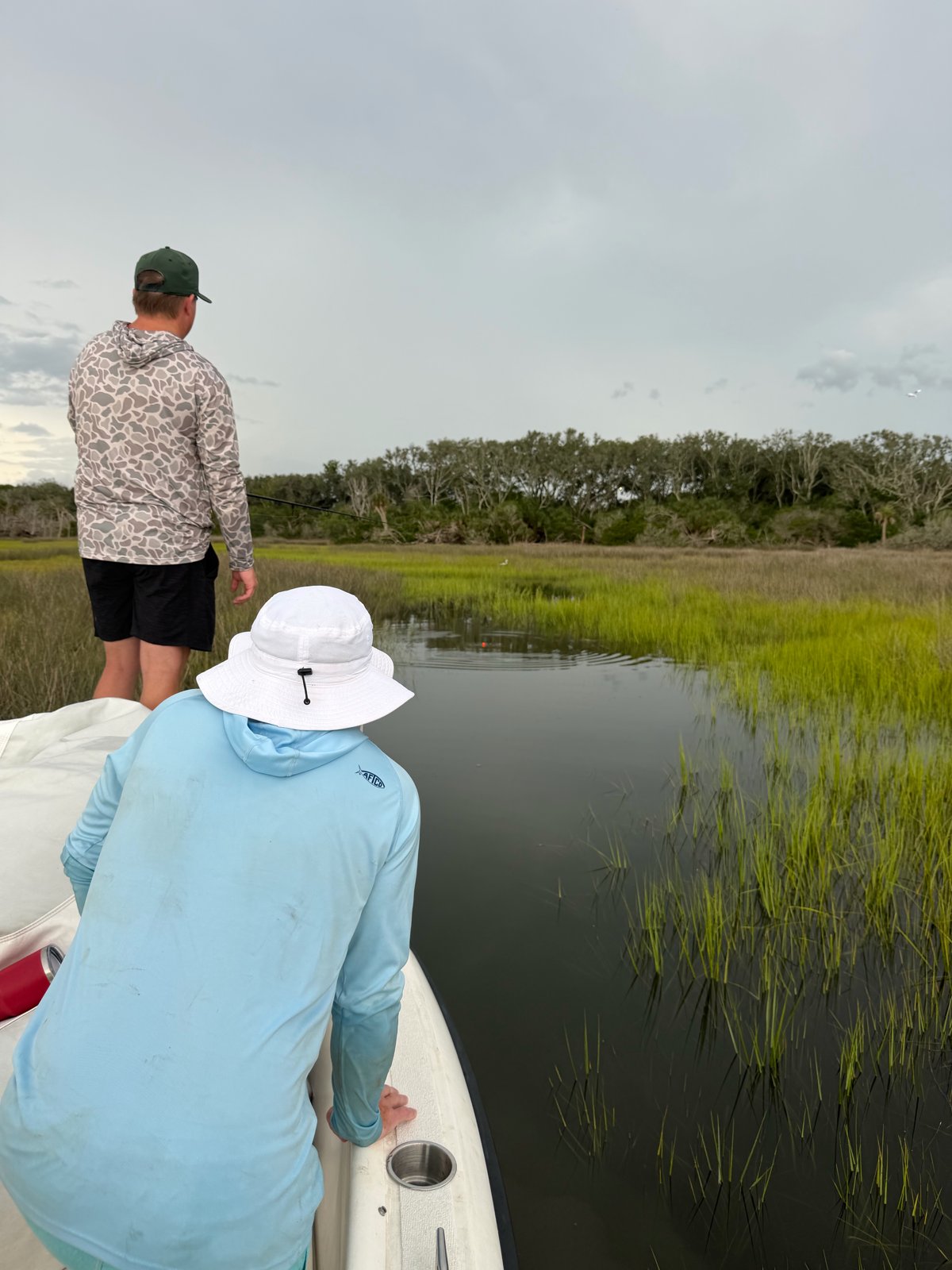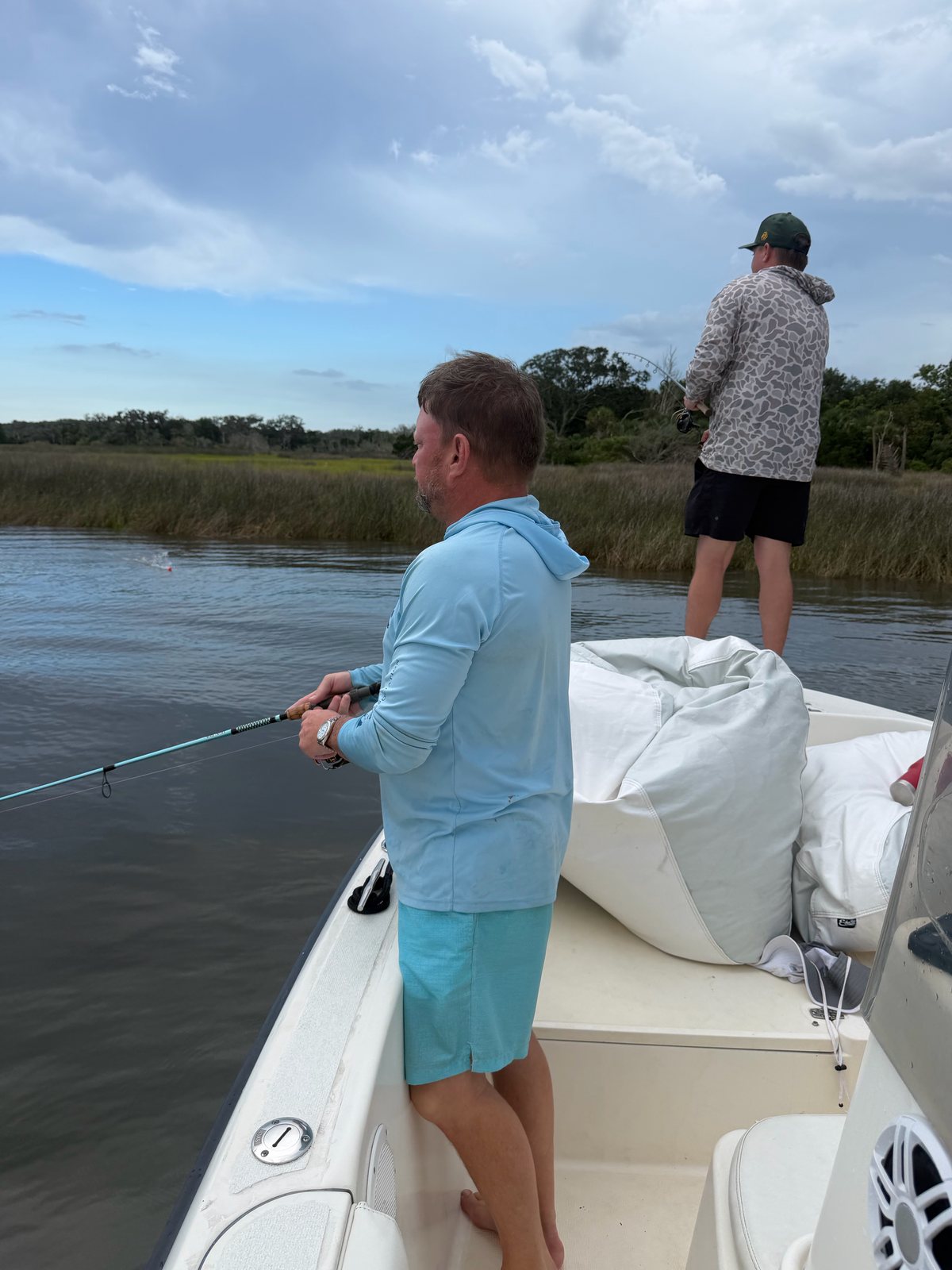
Sheepshead get most of the attention around the docks this time of year, but they share that structure with another fish I like a lot on the First Coast: the black drum. They're the biggest member of the drum family, they pull hard, and the smaller ones are good eating. Here's how I think about them and the rules to know before you keep one.
Where black drum feed
The FWC species profile describes black drum as an inshore fish of bays, river mouths, and lagoons that feeds on fish and invertebrates, including oysters, mussels, crabs, and shrimp. Around Jacksonville that points you to the same places you'd look for sheepshead: dock and bridge pilings, oyster bars along the marsh, rocky banks near the mouth of the St. Johns, and the Mayport jetties. They're bottom feeders, so keep your bait on the bottom and close to the shell and structure.
Bait and technique
Since drum eat crabs and shellfish, natural bait is the simple answer. Fresh shrimp on a bottom rig works, and pieces of blue crab or clams are good when the bait stealers are thick. Use a sliding sinker or a knocker rig heavy enough to hold in the current, a short leader, and a strong circle or J hook sized to the bait. Drum often pick up a bait and mouth it, so give them a second before you come tight.
FWC rules say you can't use any multiple hook with live or dead natural bait for black drum, and snatching is prohibited. Legal gear is hook and line, cast net, seine, spear, or gig (FWC).
Puppy drum now, big drum later
Smaller "puppy" drum are around all year, and those are the fish that fit the slot. The big ones are a late-winter and spring story. FWC notes that black drum spawn nearshore in winter and early spring and can live 35 years or more. A study of black drum in Northeast Florida found spawning there ran from January through April, and that a recreational fishery for large drum builds in the spring as adults gather in the sounds and passes (Murphy and Taylor, Northeast Gulf Science). The bigger fish are the breeders, so I'd rather get a picture and let them go.
FWC black drum rules
According to the FWC, black drum in Florida's Atlantic and Gulf state waters are open year-round with a slot limit of 14 to 24 inches, and you may keep one fish over 24 inches. The daily bag limit is 5 per harvester, and that can include the one over-slot fish. Special regulations apply in Biscayne National Park, which doesn't affect us up here but is worth knowing if you travel south.
A reminder for this time of year: flounder harvest is closed from October 15 through November 30, so release any flounder that grabs your drum bait. I covered that in my fall fishing post, and the tides post has tips on timing the current around the docks and bridges.
Fish like these are part of what makes a day on the water around here so good, and it's the kind of day The Calm Seas Project wants to share with veterans. Always check current FWC regulations before you keep a fish, since they can change. See you on the water.
Sources: FWC: Black Drum regulations · FWC: Black Drum species profile · Murphy and Taylor, Reproduction and Growth of Black Drum in Northeast Florida