Late October on the Marine Corps calendar belongs to Beirut and to the run-up to the birthday, and rightly so. There's another date in there that I think about as a former Marine parachutist. On October 28, 1943, about 700 Marines of the 2d Parachute Battalion came ashore on Choiseul, in the Solomon Islands, for a week-long raid. Next Wednesday marks 83 years.
Paratroopers who came by sea
The Marine Corps started building a parachute program in 1940. By 1943, though, there were far too few transport planes in the entire Marine Corps to jump a regiment into combat, and the 1st Parachute Regiment couldn't make any drops after May of that year. So the battalion did what Marines do: it adapted. It trained hard on assault boats, live-fire and raider-style work, and when the mission came, it went in by ship.
"Strike and move"
The real objective was Bougainville, where Marines would land at Empress Augusta Bay on November 1. Choiseul was the head fake. The battalion's job was to land near the village of Voza, raid along the coast, scout a site for a PT boat base, and make the enemy believe a much bigger force had arrived. The commander's order summed it up: the "basic principle is strike and move; avoid decisive engagement with superior forces."
A few details from the Marine Corps History Division's account that stuck with me:
- The whole force was ashore by 0100 on October 28, landed from four high-speed transports with a destroyer escort.
- Local islanders had already cut a trail inland and helped carry supplies, and an Australian coastwatcher went along to keep that partnership strong.
- The Marines built a dummy supply dump out of empty boxes on a beach two miles north to draw attention, and on October 30 the Navy's South Pacific command announced a paratrooper "invasion" to the press.
- That same day they hit the enemy barge base at Sangigai, destroyed supplies, and captured a chart of minefields off Bougainville. Mines were later laid in the clear channels it revealed, and they eventually sank two Japanese ships.
- On one patrol, Marines set up their 60mm mortars in the sea, with only the top half of the tubes above water, to get a clear shot. That patrol was pulled out under fire by landing craft and Navy PT boats in rain and high seas.
On the night of November 3, the battalion loaded onto landing craft in less than 20 minutes and was back on Vella Lavella by 0800. The History Division puts the cost at 11 Marines killed and 14 wounded.
Why it stays with me
A few months later, the Corps decided it needed those Marines in its new divisions more than it needed a parachute force with no planes. The 1st Parachute Regiment furled its colors on February 29, 1944, and the same recommendation ended the Raider battalions as well. One line in the history jumped out at me: a small cadre was kept to provide an air delivery section for each of the two Marine corps-level headquarters in the Pacific.
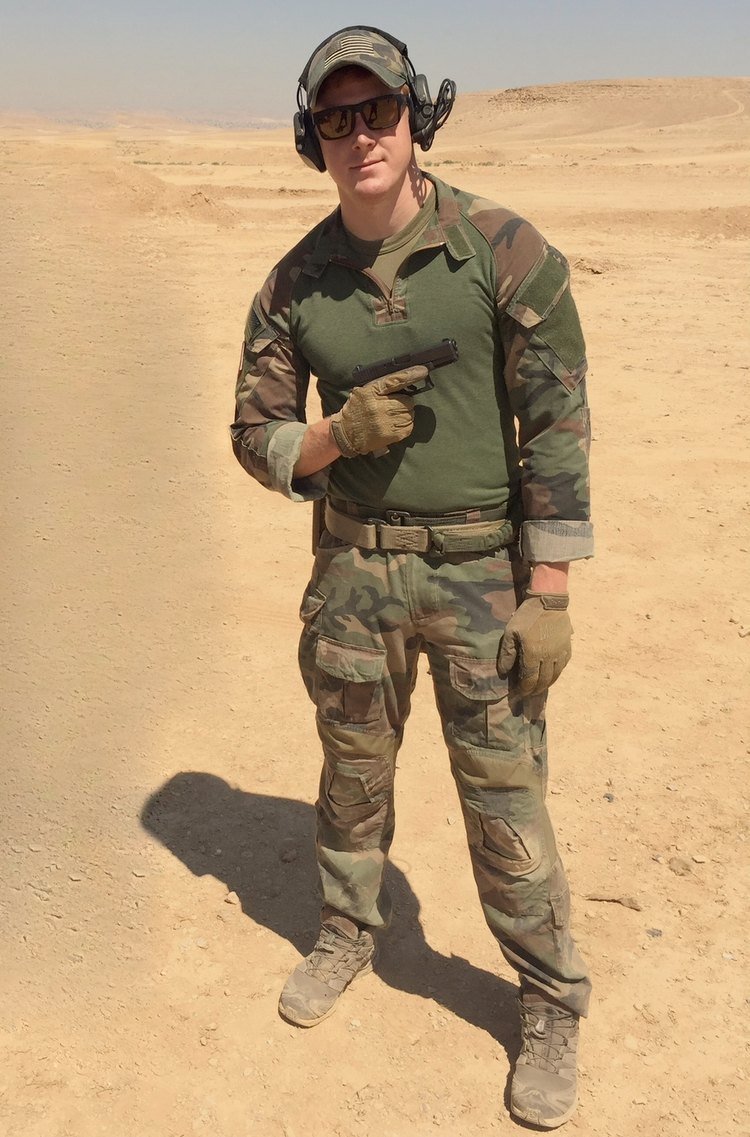
Air delivery is what I did. My MOS was 0451, air delivery specialist, and I was also a qualified parachutist, and my last unit was the Marine Raider Regiment at Camp Lejeune. Reading about Choiseul feels a little like finding an old photo of your family you'd never seen. The job and the names changed, but the line runs straight back to them.
What I take from it isn't only the toughness. It's the adaptability. Their plan to jump had been taken off the table, so they trained for the mission they actually had. They leaned on the people who knew the ground, and they got each other off the beach. I see that same spirit in the veterans I spend time with on the water through The Calm Seas Project.
If you have a few minutes on October 28, read the Marine Corps History Division's Silk Chutes and Hard Fighting. It's free online and worth your time.
Semper Fi.
Sources: Marine Corps History Division, Silk Chutes and Hard Fighting: U.S. Marine Corps Parachute Units in World War II (Choiseul) · Silk Chutes and Hard Fighting (disbandment) · Naval History magazine: Raid on Choiseul (Dec. 2018) · National Archives, Prologue: Operation Blissful (Fall 2010)