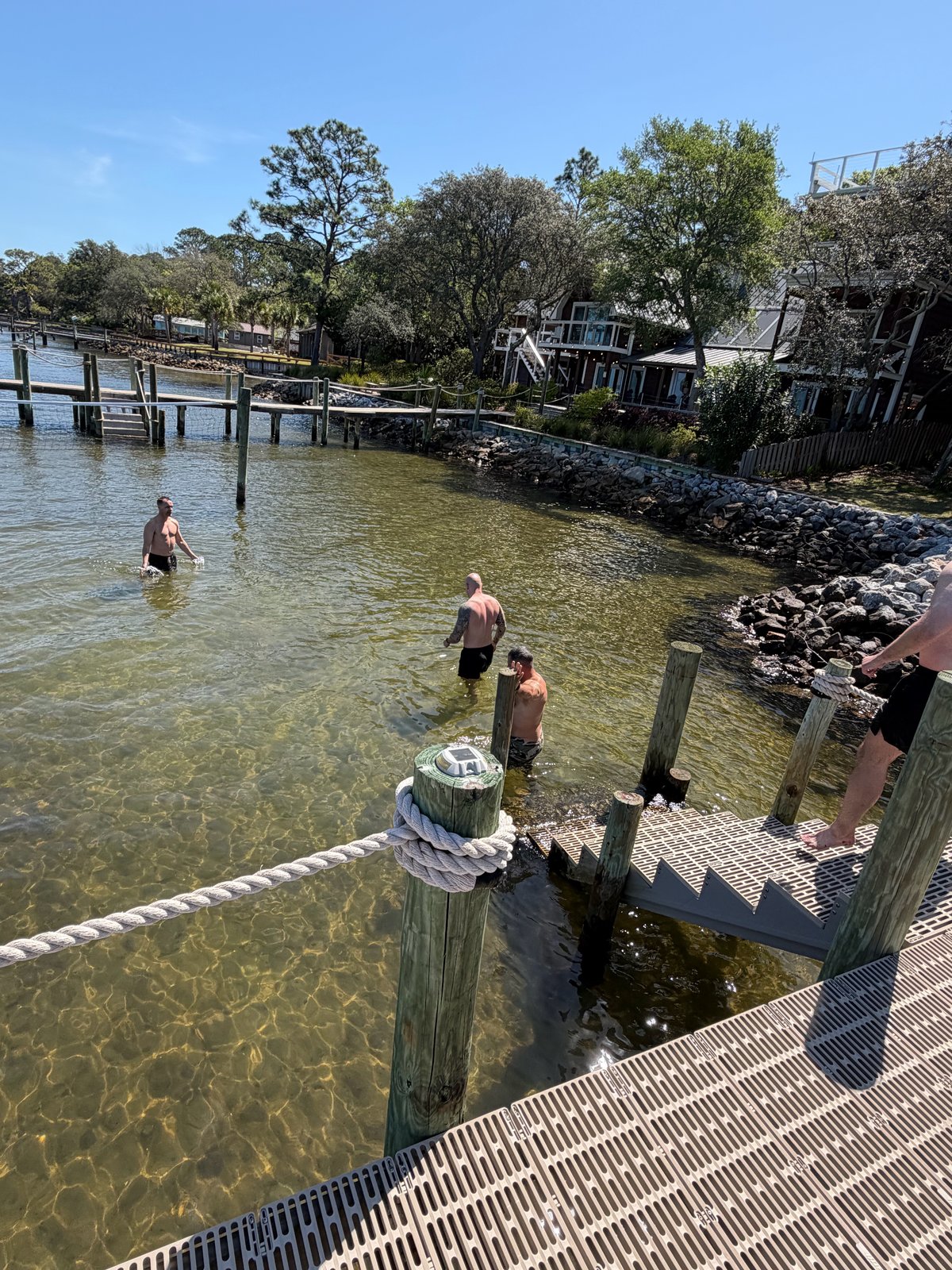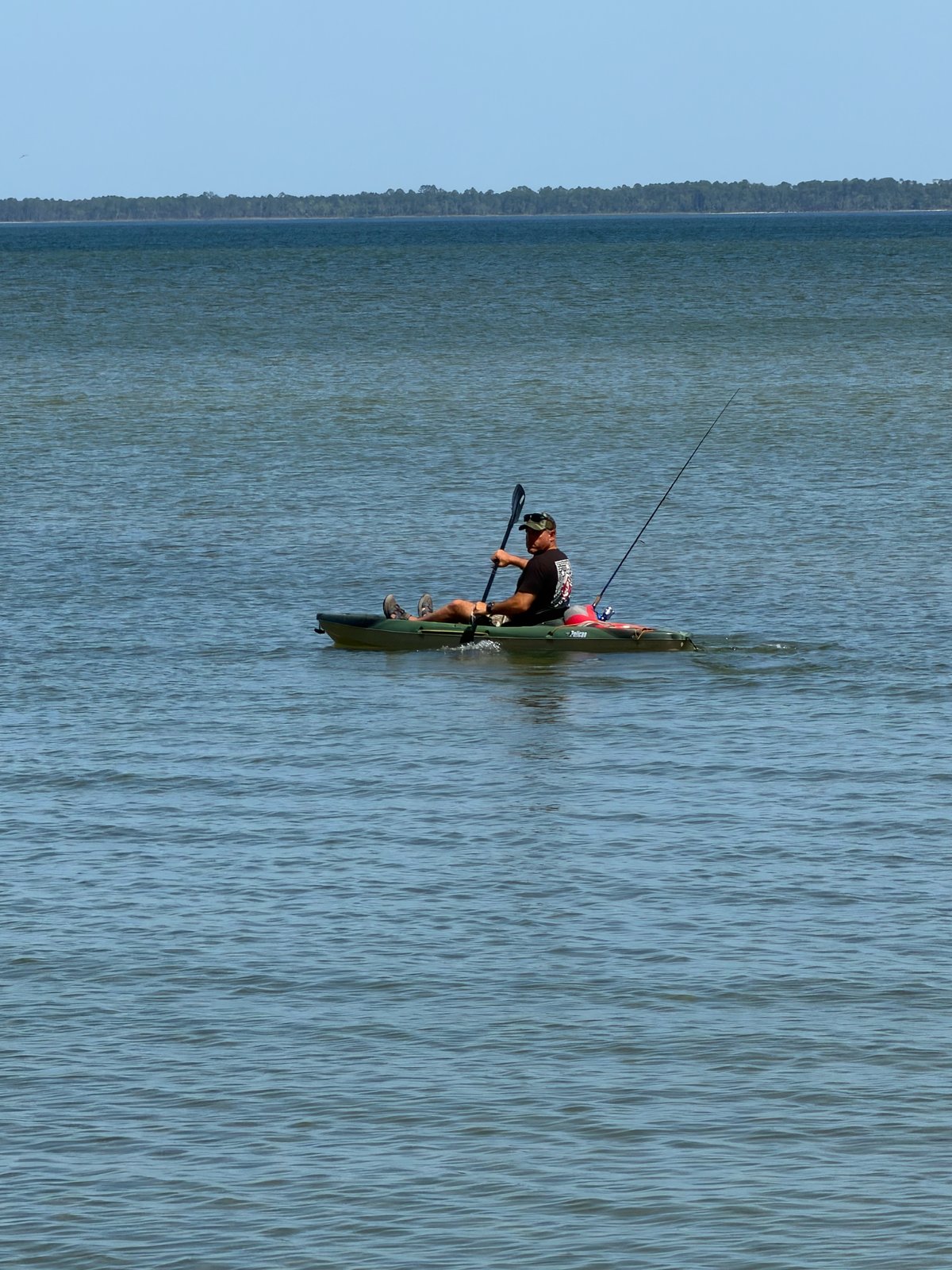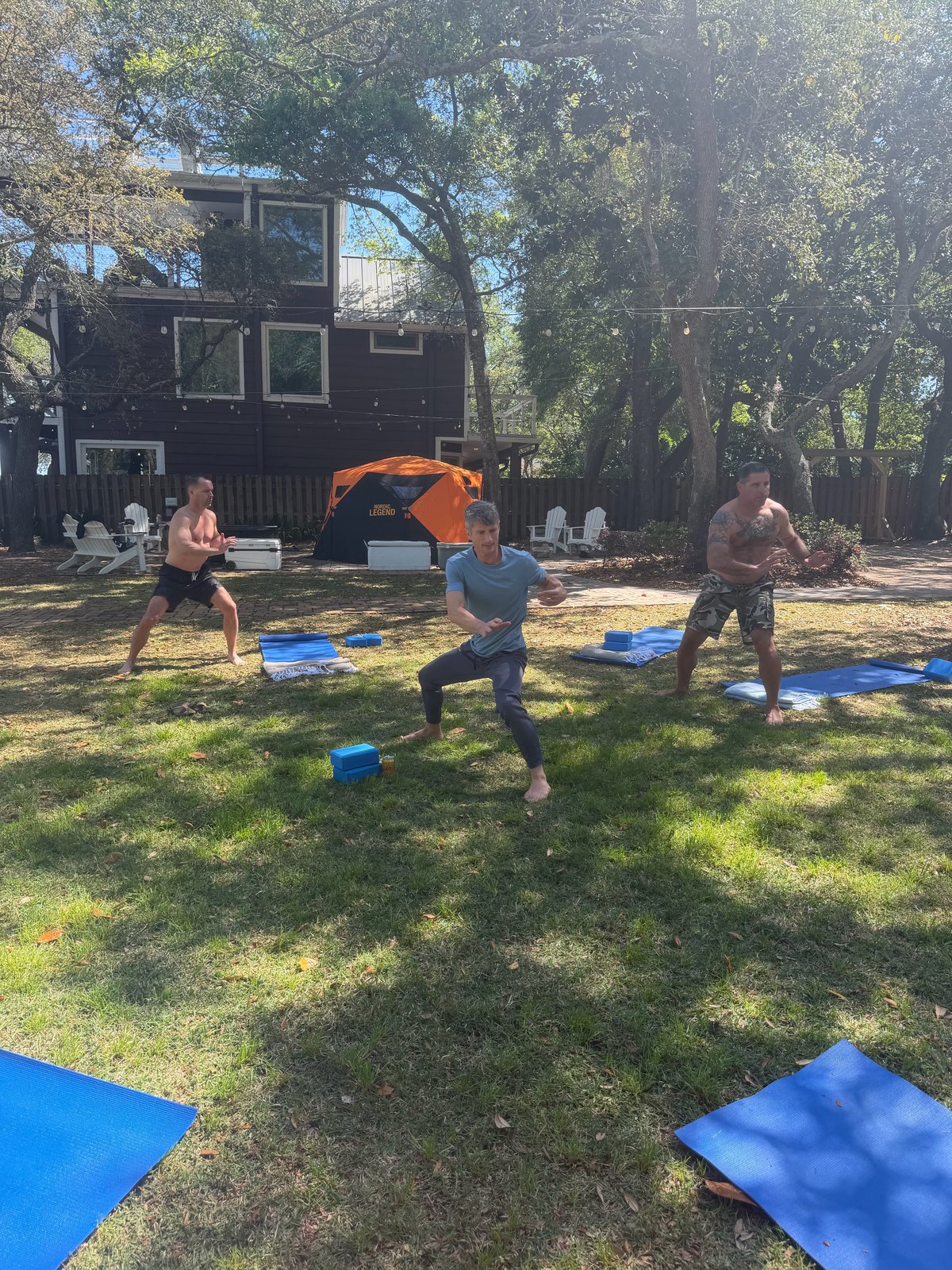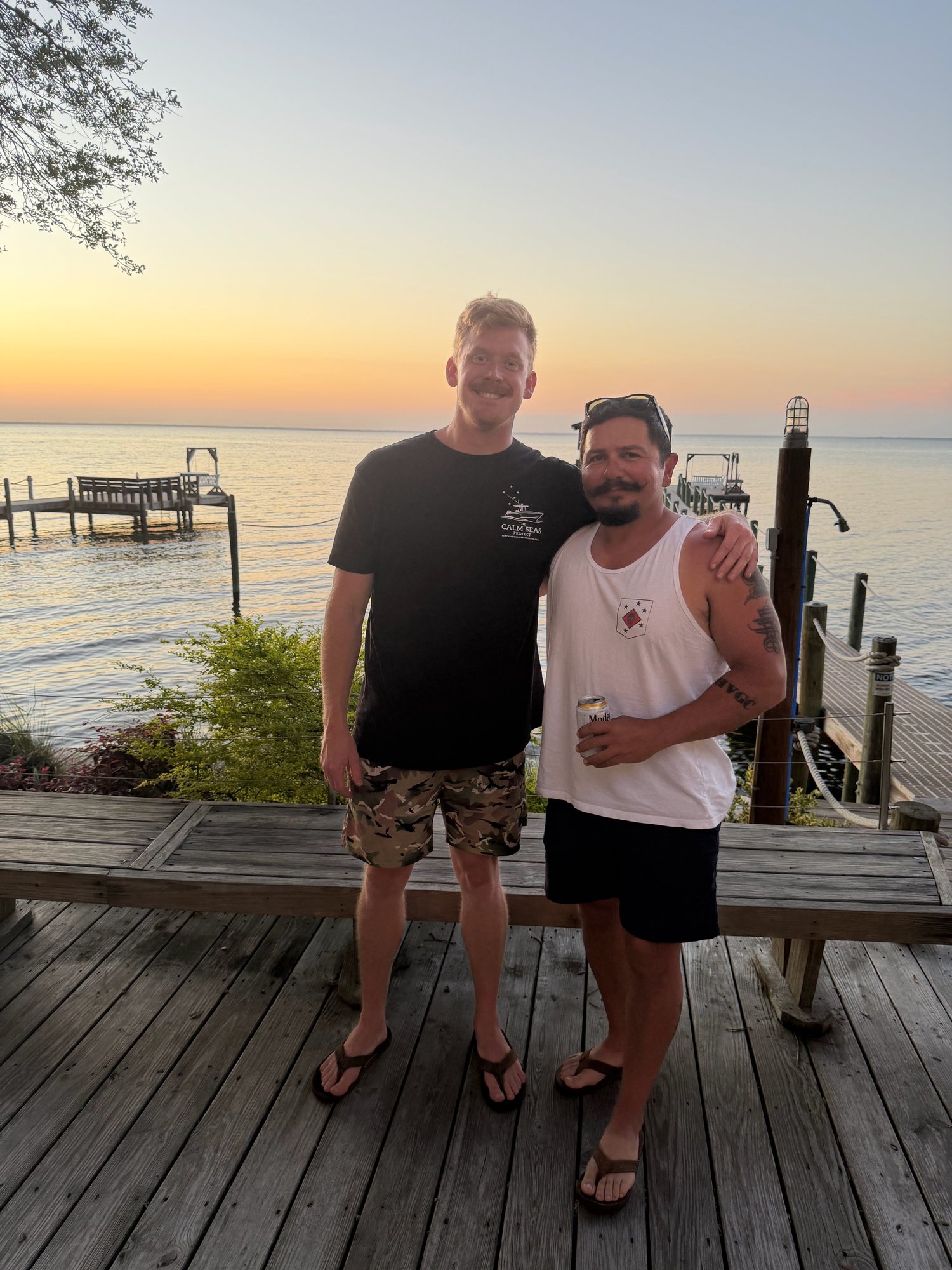
One week from today, seven veterans from every branch arrive in Jacksonville for The Calm Seas Project's Veteran Wellness Retreat, November 6 to 8, 2026. Most of the talk about the weekend goes to the guided charter fishing, and I get it. That's the hook. But I've been thinking a lot this week about the part of the schedule that doesn't get its own flyer: the group meals.
Where the real conversations happen
The Calm Seas Project started as an idea among friends on a fishing trip. If you ask me where that idea actually took shape, it wasn't on the water. It was afterward, sitting around with food, nobody in a hurry, telling stories about the day and then about everything else. The boat gets people in the same place. The table is where they start talking.
That's why the retreat isn't just fishing followed by everyone going their separate ways. We share an Airbnb, we eat together, and the sound bath, breathwork and virtual wellness session all sit around those meals. Seven people who may not know each other on Friday should feel like a crew by Sunday.
What the research says about eating together
This isn't only a gut feeling. In a 2017 paper in Adaptive Human Behavior and Physiology, Oxford researcher R.I.M. Dunbar looked at data from a UK national survey. People who ate with others more often reported feeling happier and more satisfied with life, trusted others more, were more engaged in their communities, and had more friends they could count on for support. Evening meals that left people feeling closer tended to involve more people, more laughter and more reminiscing.
The bigger picture is even stronger. A 2010 meta-analysis in PLOS Medicine by Holt-Lunstad and colleagues pooled 148 studies with more than 300,000 participants and found that people with stronger social relationships had a 50% greater likelihood of survival over the study periods. The authors concluded that the effect of social relationships on mortality risk is comparable to well-established risk factors.
Neither study was about veterans specifically, and a shared dinner isn't treatment. But anyone who has left the service knows what it's like to lose the unit, the chow hall and the people you ate every meal with. Getting some of that back, even for a weekend, matters.
What I'd tell anyone coming next week
- Show up to the meals. Even if you're tired from a day on the boat, come sit down. That's where the weekend comes together.
- You don't have to tell your whole story. Talk about the fish you lost. That counts.
- Swap numbers before you leave. The goal is a connection that outlasts the weekend.
- Pack light and bring layers. My packing list has the rest.
For the rest of the schedule, I wrote about the sound bath and breathwork for veterans earlier this month.
How you can help
The Calm Seas Project raised more than $40,000 in its first four months, and that support is what puts veterans and first responders on the water and around the table. If you want to back the Jacksonville retreat or point a veteran our way, start at calmseasproject.org, read why I started The Calm Seas Project, and follow along on Instagram and Facebook at calmseasproject. If you're a veteran looking for stories from others who've made the transition, VA's Make the Connection is a good place to start.
If you or a veteran you know is struggling right now, don't wait for a trip. Call or text 988 and press 1 to reach the Veterans Crisis Line, any time, day or night.
Sources: Dunbar, Adaptive Human Behavior and Physiology (2017) · Holt-Lunstad et al., PLOS Medicine (2010) · Veterans Crisis Line · The Calm Seas Project