This week on American Valor: one of the most famous names in Marine Corps history. October 24 and 25 mark the anniversary of the fight that earned him the Medal of Honor.
"Manila John"
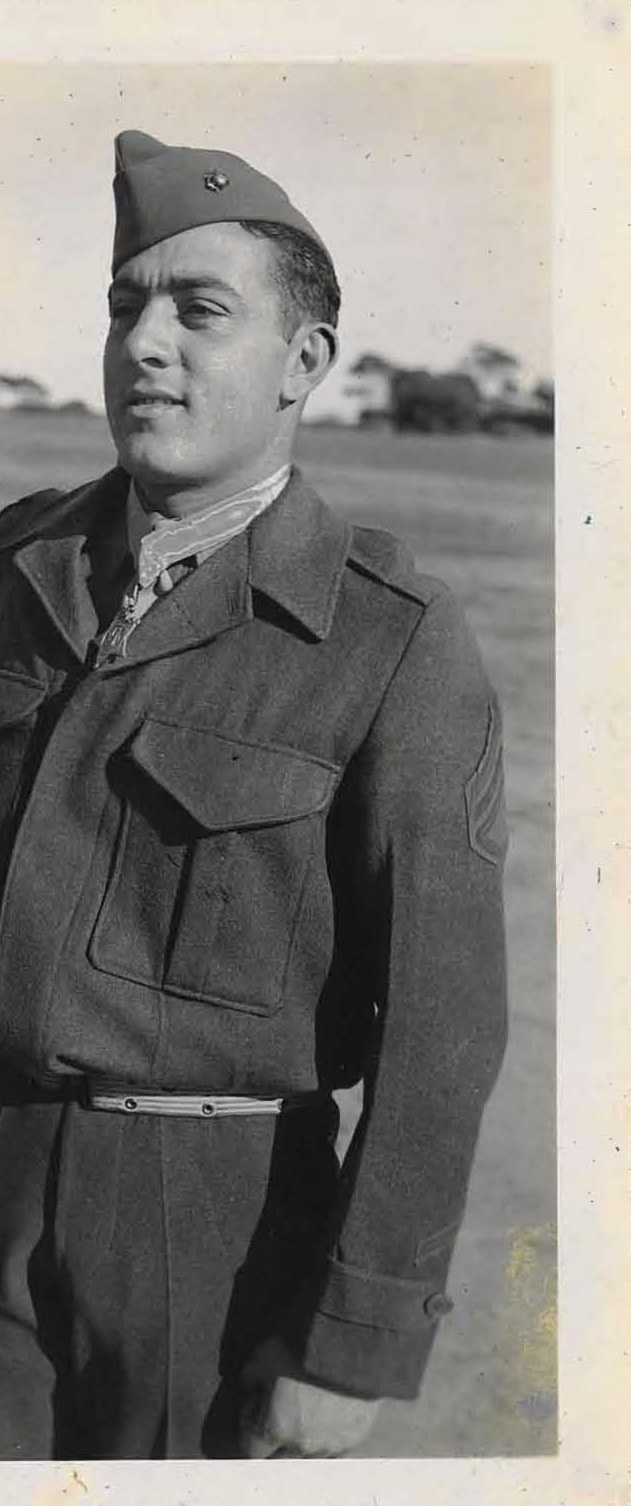
John Basilone was born in Buffalo, New York, on November 4, 1916, one of ten children, and grew up in Raritan, New Jersey. He served a three-year enlistment in the Army, including time in the Philippines, which is why his fellow Marines later called him "Manila John." In July 1940 he enlisted in the Marine Corps in Baltimore (Marine Corps History Division).
Guadalcanal, October 24–25, 1942
Sergeant Basilone was with the 1st Battalion, 7th Marines, 1st Marine Division, in the Lunga Area of Guadalcanal, in charge of two sections of heavy machine guns. His Medal of Honor citation describes what happened when the enemy launched a fierce frontal attack. One of his sections was put out of action, leaving only two men able to carry on. Basilone moved an extra gun into position and, "under continual fire, repaired another and personally manned it, gallantly holding his line until replacements arrived." Later, "with ammunition critically low and the supply lines cut off," he "battled his way through hostile lines with urgently needed shells for his gunners" (Naval History and Heritage Command; Arlington National Cemetery).
Back to the fight
Basilone came home a hero, but he asked to return to combat. At Iwo Jima he was attached to the 1st Battalion, 27th Marines, 5th Marine Division. On D-Day, February 19, 1945, he single-handedly destroyed an enemy blockhouse under heavy fire and was killed in action that day. He was posthumously awarded the Navy Cross (Marine Corps History Division). Arlington National Cemetery notes he was the only enlisted Marine to receive both the Navy Cross and the Medal of Honor during World War II, and the Marine Corps History Division notes that the destroyer USS Basilone was named in his honor.
Why this story stays with me
Basilone had already earned the nation's highest award. He could have stayed home. Instead he went back to his Marines. That choice says everything about what the Corps means by Semper Fidelis.
Sources: Naval History and Heritage Command · Marine Corps History Division · Arlington National Cemetery